

Table of Contents
- Why Custom Athletic Apparel Works for Corporate Events
- Step 1: Set Your Brief, Budget and Deadline
- Step 2: Choose Custom Branded Sportswear That Suits the Activity
- Step 3: Team Apparel Design Ideas That Look Professional
- Step 4: A Custom Kit Colour Matching Guide for Brand Consistency
- Step 5: Ordering Custom Team Apparel and Managing Sizes
- Common Mistakes to Avoid With Custom Athletic Apparel
- Frequently Asked Questions
Last Updated: October 13, 2026
Why Custom Athletic Apparel Works for Corporate Events
Custom athletic apparel for corporate events turns a one-day activity into something your team actually wears again. At Raceskin, we build kit for swimming, cycling, running, triathlon and Hybrid events. A well-made branded top gets worn to the gym, on the commute and at the next event. That reuse is where the value sits.
The logic is simple. A printed cotton t-shirt gets worn once and then lives in a drawer. A performance top that wicks moisture and fits properly becomes part of someone's training kit.
So the goal is not "branded clothing". The goal is clothing people choose to wear. Get that right and your logo travels further than any banner.
This guide walks through five steps, from brief to delivery. Below, we'll show you exactly how to brief a supplier, pick the right garments and manage sizes across a large group.
Step 1: Set Your Brief, Budget and Deadline
Start with three numbers before you talk to anyone: headcount, spend per person, and the date you need kit in hand.
Write the brief in one page. Include:
- The event and date
- How many people need kit
- Which garments you want
- Your colour and logo files
- Your delivery address and deadline
Then work backwards. Custom orders need design sign-off, a size window and production time. If your event is in ten weeks, you have less room than you think.
A common mistake is leaving the size collection until after design approval. That single delay causes most late deliveries.
Step 2: Choose Custom Branded Sportswear That Suits the Activity
Match the garment to what people will actually do. Custom branded sportswear that suits the activity gets worn again; kit that fights the event gets left in the bag.
For a 5-a-side tournament, breathable tops and shorts work. For a charity walk, a lightweight layer beats a heavy hoodie. For a cycling or running event, fit and moisture management matter far more than print area.
If you are unsure, ask the supplier what they would wear. We design kit for three disciplines, so a cycling jersey and a polo shirt solve different problems.
Matching Garments to the Event Type
Event Type |
Best Garment |
Why It Works |
|---|---|---|
Team cycle event |
Cycle jersey |
Breathable, aerodynamic, pockets to carry essentials |
Charity walk or run |
Performance t-shirt |
Moisture wicking, smart enough for photos |
Outdoor team building |
Full-zip hoodie |
Warm layer for cool starts |
Multi-day corporate challenge |
Run vest plus hoodie |
Covers warm and cold conditions |
Sponsor-facing event |
Performance polo |
Looks professional, still technical |
Use this as a starting point, not a rule. The right answer depends on the weather, the venue and how active the day really is.
Step 3: Team Apparel Design Ideas That Look Professional
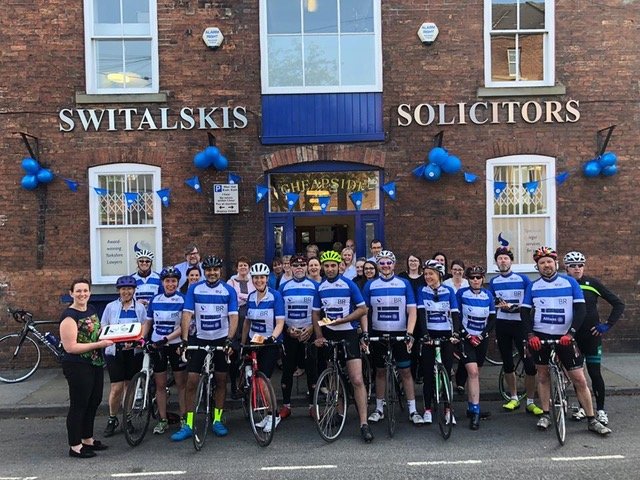
Professional team apparel design comes down to restraint. One strong logo, two or three colours, and a clean layout will beat a busy design every time.
Keep these rules in mind:
- Put the main logo on the chest, not across the whole front
- Use one accent colour, not four
- Keep sponsor logos in a single row
- Leave space around every logo
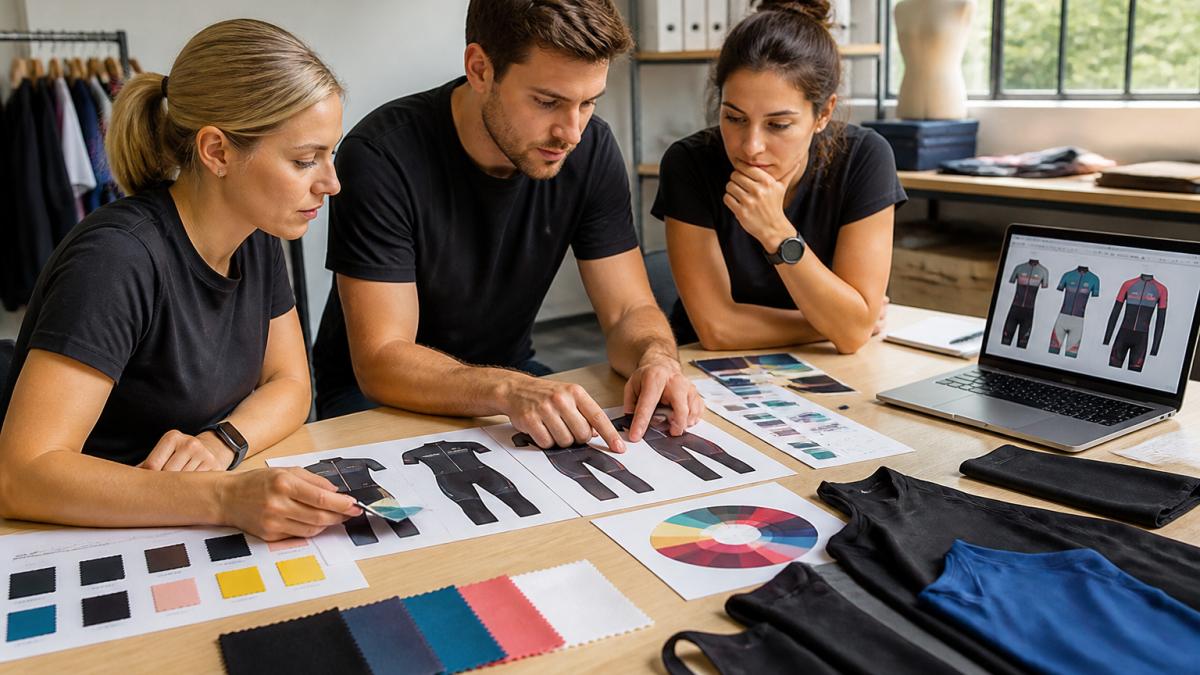
A design that looks good on a screen can fail on fabric. Ask for a physical sample or a printed proof before you commit to a full run.
Logo Placement and Print Methods
Placement matters more than method for most corporate kit. Chest left, chest centre and sleeve are the safe choices.
For print methods, the main options are:
- Sublimation: inks printed into the fabric, best for performance apparel - cycle jerseys, run vests/t-shirts, triathlon suits and Hybrid activewear
- Embroidery or screen printing: best for gym wear, polos and hoodies, gives a premium finish
Ask which method suits your artwork.
Step 4: A Custom Kit Colour Matching Guide for Brand Consistency
Colour is where corporate orders go wrong most often. Our custom kit colour matching guide is short: give the supplier your exact brand codes, not a description.
Send Pantone references or hex codes for every colour. "Navy blue" means something different to every printer.
Then follow these rules:
- Ask for a fabric swatch in your chosen colours
- Check the swatch under daylight, not office lighting
- Confirm the thread colour if you are embroidering
- Get the final colour call signed off in writing
Fabric takes dye differently from paper. A colour that looks right on a brand sheet can read darker or lighter on a performance top. The swatch is the only reliable check.
If you are ordering across several garments, confirm the colours match across all of them. A polo and a hoodie in "the same" navy can arrive as two different navies.
Step 5: Ordering Custom Team Apparel and Managing Sizes
Ordering custom team apparel fails on sizes more often than on design. Build a size window into your plan and give people a clear deadline.
Set up a simple online form. Ask for size, name and any fit preference. Then close the form and lock the numbers.
Collecting Sizes From a Large Group
For groups over twenty people, offer a fit session. Bring sample garments in two or three sizes and let people try them on.
If a fit session is not possible:
- Share the supplier's size chart with chest, waist and height
- Tell people to size up if they are between sizes
- Offer a sample kit to one person per size band
- Collect a second round of confirmations before you order
The most common complaint after a group order is inconsistent fit. A size chart plus a sample garment removes most of that risk.
Common Mistakes to Avoid With Custom Athletic Apparel
The same handful of errors show up again and again on corporate kit orders.
- Leaving sizes to the last minute. This is the single biggest cause of late delivery.
- Approving a screen proof only. Colours shift on fabric, so always check a fabric sample.
- Over-designing the front. Too many logos and colours make kit look cheap.
- Choosing the wrong garment. A heavy hoodie for a summer run will not get worn.
- Skipping the deadline in writing. Verbal promises do not protect your event date.
- Ordering no spares. A few extra units in common sizes cover late joiners and mistakes.
Avoid these and most orders run smoothly.
Frequently Asked Questions
How do you design custom athletic apparel for a corporate event?
Start with the activity, then work backwards. Decide whether people are running, cycling, swimming or just wearing kit casually, because that sets the garment type. From there, agree a colour palette pulled from your brand guidelines, choose a logo placement that stays legible at a distance, and approve a physical sample before the full run. A dedicated designer can turn your brief into a mock-up you can share with stakeholders, which avoids expensive changes once printing has started.
What should you include on branded sportswear for a company event?
Keep it simple. A company logo on the chest or sleeve, the event name and year, and a team or department identifier cover most needs. Sponsor logos belong on the back or sleeves so they do not compete with your own branding. Check that any text stays readable against the fabric colour, and avoid fine detail that disappears when printed on stretchy performance material. Fewer, larger elements almost always look more professional than a crowded design.
How far in advance should you order custom event clothing?
Allow at least eight to ten weeks for a custom group order. That window covers design approval, a sample or size set, production, and delivery. If your event falls in a busy period for sportswear production, add two weeks. Build in a buffer for a second sample if the first colour match is not right, and confirm the final deadline in writing with your supplier before paying a deposit.
How do you collect sizes for a large group order?
Send a simple form with the supplier's actual size chart and ask people to measure chest, waist and height rather than guess a letter size. Offer a fit session with sample garments if the group is large, since trying kit on catches sizing errors that a chart cannot. Build a small buffer of common sizes into the order for late joiners, and record everyone's choice against their name so reorders are straightforward.
Corporate kit orders go wrong for boring reasons: late sizes, unchecked colours and deadlines that were never confirmed. Raceskin designs custom club and team apparel with a dedicated designer, so your brief, colours and sizes are handled by one person from start to finish. Our kit is tested in real training and racing, and we cover swimming, cycling and triathlon in one place. Get race ready with Raceskin and order kit your team will actually wear again.