

Last Updated: September 5, 2026
The question of whether expensive triathlon gear is worth it rarely gets a straight answer. Brands want you to believe every watt saved matters, while budget guides insist a £40 trisuit performs the same as a £200 one. Both are wrong: expensive triathlon gear is worth it only when it solves a specific problem you actually have, whether that is chafing on a 5-hour ride or drag in the water. At Raceskin, we have spent years testing apparel across all three disciplines in real training and racing conditions, and the pattern is clear. Below, we break down exactly where premium kit pays for itself, where it does not, and how to build a gear strategy around your race distance rather than your ego.
The most important insight is that gear does not make you fit, but the right gear makes your fitness visible. Aero savings mean nothing if you cannot hold your position because your suit is riding up, and a "fast" wetsuit is useless if it restricts your stroke. Match your spend to your biggest bottleneck, not to the biggest marketing budget.
The Real Cost of Triathlon Gear: Performance vs. Comfort
Most athletes approach gear spending backwards, prioritising claimed watt savings over the physical realities of race day. The real cost of triathlon gear is not the price tag; it is the trade-off between measurable performance gains and the comfort that lets you sustain effort for hours. A suit that saves you 5 watts but causes you to shift position every 10 minutes costs you far more in aerodynamic drag than it saves.
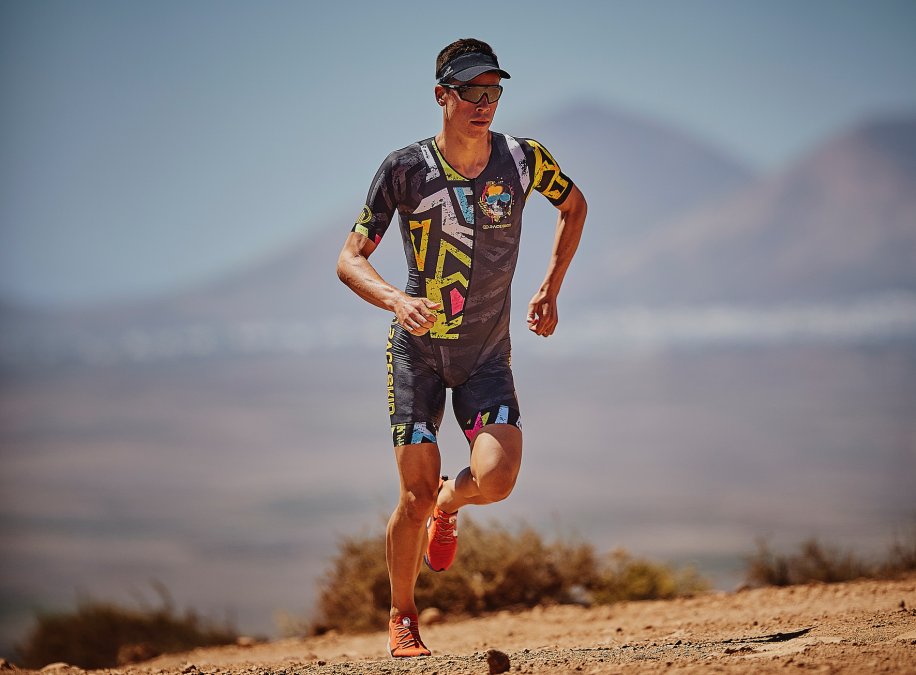
Triathlete running in a Raceskin Elite Tri Suit
Comfort is not a luxury in long-distance racing; it is a performance variable. Discomfort triggers micro-adjustments on the bike, breaks your aero tuck, and increases perceived exertion on the run. When evaluating premium kit, ask what it fixes: does it eliminate a chafe point, improve moisture-wicking, or reduce transition time? If yes, the cost-per-use calculation changes dramatically across a season.
The Cost-Per-Use Framework: Why £200 Can Be Cheaper Than £60
The most overlooked metric in the 'is it worth it' debate is cost per use. A £60 trisuit that survives 4 races costs you £15 per race. A £200 trisuit that survives 20 races costs you £10 per race, and it performs better for every one of those outings. Technical fabrics degrade with every wash, every swim, and every hour of UV exposure. The cheap suit fails first, and you replace it sooner.
Consider a typical season: one race, 20 training rides, and 10 brick sessions. That is 31 uses in year one alone. Over three years, a premium suit might see 90-plus uses. The price gap narrows to pennies per session, while the comfort gap remains constant. Framing gear as a cost-per-use decision rather than an upfront expense shifts the argument for quality from 'performance' to 'economics'.
The Psychological ROI: Confidence as a Performance Variable
There is a second, rarely discussed return on investment: the psychological one. Owning gear that fits well and feels professional changes how you train. It is not vanity; it is preparation. When you put on a suit that does not ride up, a wetsuit that does not restrict your breathing, and shoes that do not cause hotspots, you stop thinking about your kit and start thinking about your race. That mental bandwidth is finite, and spending it on gear management is wasted energy.
Most age-group athletes report that race-day anxiety is amplified by uncertainty about equipment. Will the zip hold? Will the chamois shift? Will the fabric chafe at mile 80? A premium suit eliminates those questions. The confidence boost is not measurable in watts, but it is measurable in focus. In a sport where races are won and lost in the final 10 kilometres, focus is a performance variable worth paying for.
The Hidden Cost of Cheap Kit: Replacement Cycles
Cheap kit also carries a hidden replacement cost. A budget wetsuit that loses its buoyancy after 15 open-water swims must be replaced (usms.org). A low-grade chamois that compresses after a season must be swapped. These replacement cycles are rarely factored into the initial price comparison. When they are, the 'savings' from budget gear evaporate.
A practical rule of thumb: if you plan to race for more than two seasons, buy the best-fitting premium version of the gear that touches your skin the longest, the trisuit and the wetsuit. For everything else, from helmets to hydration systems, mid-range is fine. This is not a blanket endorsement of premium pricing; it is a targeted investment in the items with the highest cost-per-use justification.
Where Expensive Triathlon Gear Actually Helps (and Where It Doesn't)
Premium gear delivers value in exactly two areas: aerodynamics and comfort. Everywhere else, the performance gap between a mid-range and a top-tier product is smaller than the marketing suggests. Entry-level gear has improved, and for short-distance racing, the differences are sometimes negligible. The expensive triathlon gear that matters reduces drag or protects your skin over long durations.
Aerodynamics and Marginal Gains: The Science of Seconds
Aerodynamics is the one area where money translates directly into time saved. At 40 km/h, drag accounts for the vast majority of your power output, and small improvements in fabric texture and fit produce real watt savings (peer-reviewed research). However, these gains only materialise if the suit fits perfectly. A poorly fitted aero suit creates more drag than a well-fitted standard one, so the marginal gains argument collapses without a proper fit first.
Chafing Prevention and Race Day Comfort
Chafing is the hidden cost of cheap kit. Raw skin on the bike leg does not just hurt; it forces you out of your aero position and compromises your run. High-quality chamois padding and flatlock seams are not comfort features; they are durability features for your race. For sprint and Olympic distances, most athletes can manage with standard kit. For anything over 3 hours, chafing prevention becomes the single most important reason to upgrade (PubMed).
Benefits of a High-Quality Trisuit for Long-Distance Racing
The benefits of a high-quality trisuit become obvious around the 4-hour mark of a race. A premium suit integrates three functions into one garment: cycling pad, running comfort, and swimming speed. This integration reduces transition time, often where amateur athletes lose the most time relative to their fitness level. A well-designed trisuit eliminates the need to change clothes between disciplines, saving minutes that no amount of training can recover.
Beyond transition efficiency, the technical fabric matters. Premium suits use moisture-wicking materials that keep you drier on the bike and reduce the risk of overheating on the run. The ergonomics of the suit, including how it holds the chamois in place during the swim and how it moves with your running mechanics, are the result of extensive athlete feedback. When a suit is designed around the actual movements of a triathlon, rather than adapted from cycling or running kit, the difference in race day comfort is substantial.
What to Look for in the Best Budget Triathlon Kit
Building the best budget triathlon kit does not mean buying the cheapest option; it means buying the right option at the right price. Start with the garment that touches your skin the longest: the trisuit. Look for flatlock seams, a chamois appropriate for your race distance, and fabric with some compression to reduce muscle vibration. These features matter more than brand names.
When you are on a budget, skip the separate aero helmet and the carbon wheels. Instead, invest in a suit that fits correctly and a wetsuit that allows full shoulder rotation. The second-hand market is a strong option for wetsuits, which are often used only a handful of times before being sold. For your first season, a mid-range trisuit and a decent wetsuit will cover 90% of your needs without breaking the bank.
A Triathlon Gear Checklist for Beginners: Where to Start
A triathlon gear checklist for beginners should focus on safety and comfort, not speed. The essentials are a trisuit or tri shorts, a wetsuit (for open-water swims), goggles, a bike in good working order, and running shoes you have trained in. Everything else, from aero bars to race wheels, is an upgrade, not a requirement.
Your first purchase should be a quality trisuit. It is the one piece of gear you will wear for the entire race, and its fit directly impacts your swim, bike, and run. The table below summarises where your budget should go first.
Priority |
Gear Item |
Why It Matters |
Upgrade Trigger |
|---|---|---|---|
1 |
Trisuit |
Chafing prevention, transition speed |
First race over 3 hours |
2 |
Wetsuit |
Buoyancy, hydrodynamics, warmth |
Regular open-water racing |
3 |
Bike fit |
Power transfer, injury prevention |
Discomfort after 2 hours |
4 |
Aero helmet |
Drag reduction |
Competing for top 10% |
Maintenance, Longevity, and the Second-Hand Market
Expensive triathlon gear only delivers value if it lasts. A premium trisuit that survives 15 races has a far better cost-per-use than a cheap suit that falls apart after 3. Proper maintenance, including rinsing after every swim and avoiding fabric softeners, extends the life of technical fabrics significantly. This longevity is a key argument for investing in quality: the performance-to-price ratio improves with every additional race the gear survives.
The second-hand market is a smart place to buy bikes, which hold their value and are often sold after minimal use. However, be cautious with wetsuits, trisuits and running shoes, where the fit is personal and the fabric may have degraded. When buying used, check the condition of the chamois and the elasticity of the fabric, as these are the first components to fail.
The Gear Hierarchy: Matching Kit to Your Race Distance
Your race distance should dictate your gear hierarchy. For a sprint race, expensive triathlon gear offers minimal returns; your training consistency and skill acquisition matter far more. For an Ironman, the calculus flips. Comfort and aerodynamics over 8+ hours become critical, and the investment in a high-quality trisuit and wetsuit is justified by the simple fact that you cannot finish strong if you are chafing or cold.
A sensible hierarchy looks like this: sprint and Olympic distances warrant entry-level kit, half-distance racing justifies a mid-range trisuit and wetsuit, and full-distance racing demands the best fitting gear you can afford. The psychological ROI of gear also matters here. Knowing your kit will not fail you on race day reduces anxiety and lets you focus on execution. That confidence is real, and it is worth paying for.
A Distance-Based Value Matrix
To make this concrete, here is how gear value shifts across the four standard race distances. The principle is simple: the longer the race, the more hours you spend in contact with your kit, and the more each comfort or aero feature compounds.
Race Distance |
Typical Finish Time |
Gear That Matters Most |
Where Premium Pays Off |
Where Budget Is Fine |
|---|---|---|---|---|
Sprint (750m swim, 20km bike, 5km run) |
1-1.5 hours |
Trisuit or tri shorts, running shoes |
Minimal, fit and chafing are rarely issues |
Everything: a basic trisuit and any road bike in good condition |
Olympic (1.5km swim, 40km bike, 10km run) |
2-3 hours |
Trisuit, wetsuit (if open water) |
Wetsuit buoyancy for swim exit legs; trisuit moisture-wicking for the run |
Aero helmet, race wheels, carbon components |
Half-distance (1.9km swim, 90km bike, 21.1km run) |
4-6 hours |
Trisuit, wetsuit, bike fit |
Chamois quality, wetsuit shoulder mobility, bike fit for power transfer |
Aero bars, disc wheels, lightweight race shoes |
Full-distance (3.8km swim, 180km bike, 42.2km run) |
8-17 hours |
Trisuit, wetsuit, bike fit, nutrition system |
Everything that touches skin for 8+ hours: chamois, seams, fabric; wetsuit comfort; bike fit for injury prevention |
Cosmetic upgrades, the lightest components, aero helmets (unless chasing a podium) |
Why the Matrix Works
The matrix works because it aligns spend with exposure time. In a sprint race, you are in your trisuit for roughly an hour. Even a poorly fitted suit is unlikely to cause chafing in that window. In an Ironman, you are in that same suit for 8 to 17 hours. The probability of a seam or chamois issue rises exponentially with time. The same logic applies to the wetsuit: 20 minutes in the water for a sprint is manageable even with a restrictive suit; 60 minutes in a full-distance swim demands full shoulder rotation to avoid early fatigue.
The Upgrade Trigger: When to Move Up the Hierarchy
Upgrading gear should follow a clear trigger, not a marketing calendar. The triggers are:
- Upgrade your trisuit when you finish a race with visible chafing marks, or when the chamois feels compressed after 3 hours.
- Upgrade your wetsuit when you feel your stroke shorten in the final third of the swim, or when the suit takes on water.
- Invest in a bike fit before you buy any aero components. A fit that eliminates knee pain and improves power transfer is worth more than any wheel upgrade.
- Add an aero helmet only when you are competing for top-10% finishes and your position is already dialled in.
The Exception: The Psychological Boost at Any Distance
There is one exception to the distance-based hierarchy: the psychological boost of gear you trust. If a premium wetsuit makes you feel faster in the water, and that feeling translates to a calmer, more controlled swim start, then it has value even in a sprint race. The key is to be honest with yourself. Are you buying the gear for the confidence it provides, or for the logo? The former is a legitimate investment; the latter is a donation to a marketing department.
Conclusion: Spend Smart on Gear That Moves the Needle
Expensive triathlon gear is not universally worth it, but it is worth it where it solves a measurable problem: drag reduction, chafing prevention, or transition efficiency. The key is to buy for your race distance and your specific weaknesses, not for the brand logo. Start with a well-fitted trisuit, add a quality wetsuit for open water, and upgrade other components only when your training data shows they are the limiting factor.
At Raceskin, we design apparel that is continuously tested in real training and racing conditions across all three disciplines. Our trisuits are engineered with direct feedback from elite athletes to deliver high comfort levels for long-duration activities, ensuring you stay focused on performance, not on your gear. Get race ready with kit that moves the needle where it counts.
Frequently Asked Questions
Are expensive trisuits worth the money for beginners?
For beginners, an expensive trisuit is rarely the first purchase that moves the needle. Your training consistency and bike fit deliver bigger gains. However, the benefits of a high-quality trisuit, such as chafing prevention and moisture-wicking fabric, matter more as race distance grows. A sensible approach is to invest in a solid mid-range option first, then upgrade once you have confirmed your commitment to the sport and know what comfort features you need.
Does expensive gear actually improve race times?
Yes, but the gains are measured in seconds, not minutes. At the elite level, aerodynamics and drag reduction from a high-quality trisuit or wetsuit can save meaningful time. For an age-group athlete, the psychological ROI of feeling race-ready and comfortable often outweighs the physical watt savings. If your budget is limited, a cost-per-use analysis shows that spending on a well-fitted bike and consistent training will always beat relying on expensive gear alone.
What is the 80/20 rule in triathlon?
The 80/20 rule in triathlon refers to training intensity distribution: roughly 80% of your training should be at low intensity, with 20% at moderate to high intensity. It is a training philosophy, not a gear-buying rule. However, you can apply a similar logic to your equipment budget. Focus most of your spending on items that deliver consistent, durable comfort like a good trisuit, while spending less on marginal-gain accessories that offer tiny performance benefits.
Is it better to invest in a bike or high-quality apparel first?
For most triathletes, the bike is the better first major investment because cycling makes up the largest portion of race time and bike fit directly affects power output and injury risk. That said, do not ignore apparel entirely. A poor-fitting kit can cause chafing that ruins a race day. A practical path is to secure a reliable bike, buy a decent entry-level trisuit for comfort, and then upgrade your equipment as your performance goals become more specific.