

Table of Contents
- The Benefits of High Performance Tri Apparel in 2026
- Tri Suit Benefits: What the Evidence Actually Shows
- How Tri Apparel Supports the Swim, Bike and Run Legs
- How to Choose a Tri Suit: Fit, Fabric and Race Distance
- What to Wear Under a Tri Suit (and What to Skip)
- Matching Tri Apparel to Climate, Race Distance and Athlete Level
- Cost, Care and How Long Tri Apparel Lasts
- Conclusion: Choosing Tri Apparel That Earns Its Place
- Frequently Asked Questions
Last Updated: October 9, 2026
The Benefits of High Performance Tri Apparel in 2026
High performance tri apparel is clothing engineered for multi-discipline racing, combining hydrophobic fabrics, compression panels and quick-drying construction to cut drag, manage moisture and reduce chafing across all three legs. At Raceskin, we build suits around one principle: the kit should disappear once the gun goes off.
The category has matured. Fabric coatings, seam placement and panel construction now do measurable work, and the gap between a general-purpose kit and a race-specific one shows up most clearly over longer distances.
Tri Suit Benefits: What the Evidence Actually Shows
Most articles list tri suit benefits as if they were all equally proven. They are not. Some are well established by sports science and garment testing; others are plausible but modest; a few are marketing claims that do not survive scrutiny.
What Research Supports Strongly
Chafing reduction and comfort. This is the most robust benefit. A one-piece suit eliminates the waistband that bunches under a wetsuit and the gap between top and shorts where water pools and fabric rubs, while flatlock seams sit flat against the skin.
Faster drying and reduced carried weight. Hydrophobic fabrics encourage water to bead and run off rather than soak in.
Transition efficiency. Racing in a single suit skips the change from swimwear to cycling kit entirely, removing one of the largest fixed time costs in the sport.
What Research Supports Moderately
Compression and muscle support. Compression panels are thought to reduce muscle oscillation during the bike and run, and many athletes report less perceived fatigue late in a race, particularly in the quads and calves. However, the evidence for measurable performance gains is mixed.
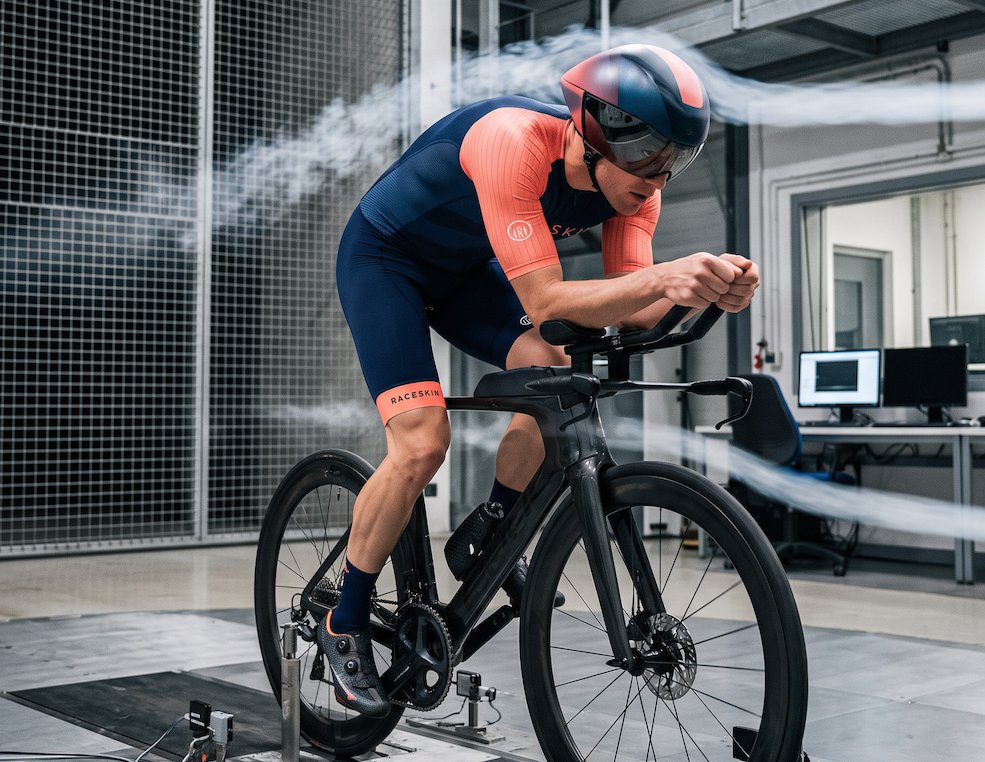
Aerodynamic drag reduction. Smooth, seam-minimised surfaces help, yet the effect is modest next to body position and wetsuit choice.
What Is Often Overstated
Claims about large speed gains from apparel alone deserve scepticism. A suit cannot fix poor bike position, inadequate training or poor pacing. High-performance tri apparel removes friction, chafing, drying time, transition faff, rather than adding significant speed, and benefits most those already close to their physical limit.
How to Evaluate Claims Yourself
When comparing suits, ask three questions: Does the claimed benefit have a clear mechanism? Is the effect size realistic for your race distance? Can you test it in training before race day? A suit that dries quickly and does not chafe will improve your race more reliably than one promising aerodynamic gains you cannot verify.
How Tri Apparel Supports the Swim, Bike and Run Legs
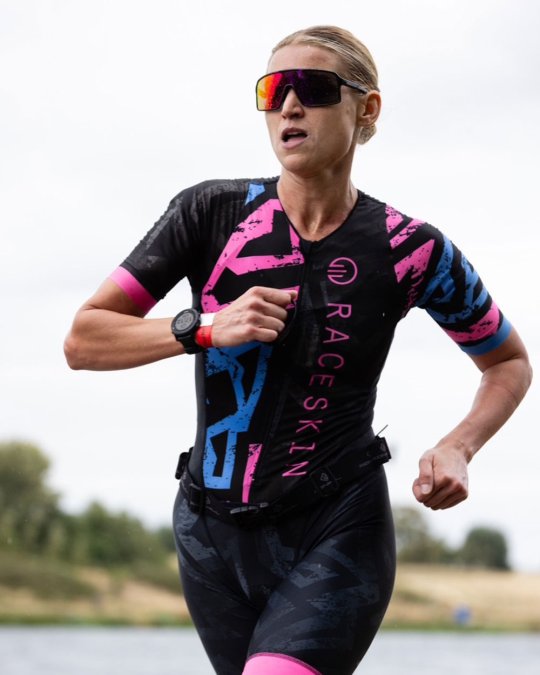
During the swim, a snug one-piece sits under a wetsuit without rolling or riding up. On the bike, rear pockets hold nutrition and the pad keeps you seated comfortably. On the run, mesh side panels move heat away.
How to Choose a Tri Suit: Fit, Fabric and Race Distance
Fit comes first, fabric second, race distance third. Get the fit wrong and no fabric technology will rescue the race.
Fit: The suit should feel tight but not restrictive, with no wrinkles across the chest or loose fabric at the lower back.
Fabric: Look for quick-drying technical fabric, flatlock seams, and a hydrophobic or Teflon-style coating if you want faster drying. Mesh panels aid temperature regulation.
Race distance: Sprint and Olympic suits can be lighter and thinner.
Race Distance |
Priority Feature |
Why It Matters |
|---|---|---|
Sprint |
Lightweight one-piece |
Speed through short transitions |
Olympic |
Balanced pad and breathability |
Comfortable across all three legs |
Middle distance |
Rear pockets, mesh panels |
Nutrition storage and cooling |
Long course |
Full-length zip, long-distance pad |
Nature breaks and hours in the saddle |
Common Sizing Mistakes and How to Avoid Them
The biggest sizing error is choosing based on height alone. Tri suits are cut for a compressed, forward-leaning position, so torso length and shoulder width matter more than total height.
- Measure chest, waist and hip, not just height
- Check the size chart against your largest measurement
- Test shoulder rotation before committing
- Confirm the pad sits correctly when bent over
- Ask about sizing consistency if ordering for a club
Club and team orders fail most often when members self-select sizes without a shared measuring protocol; a consistent method across the squad prevents the half-the-kit-does-not-fit problem.
What to Wear Under a Tri Suit (and What to Skip)
Nothing. A tri suit is designed to be worn directly against the skin, and adding underwear causes chafing, traps water and slows drying.
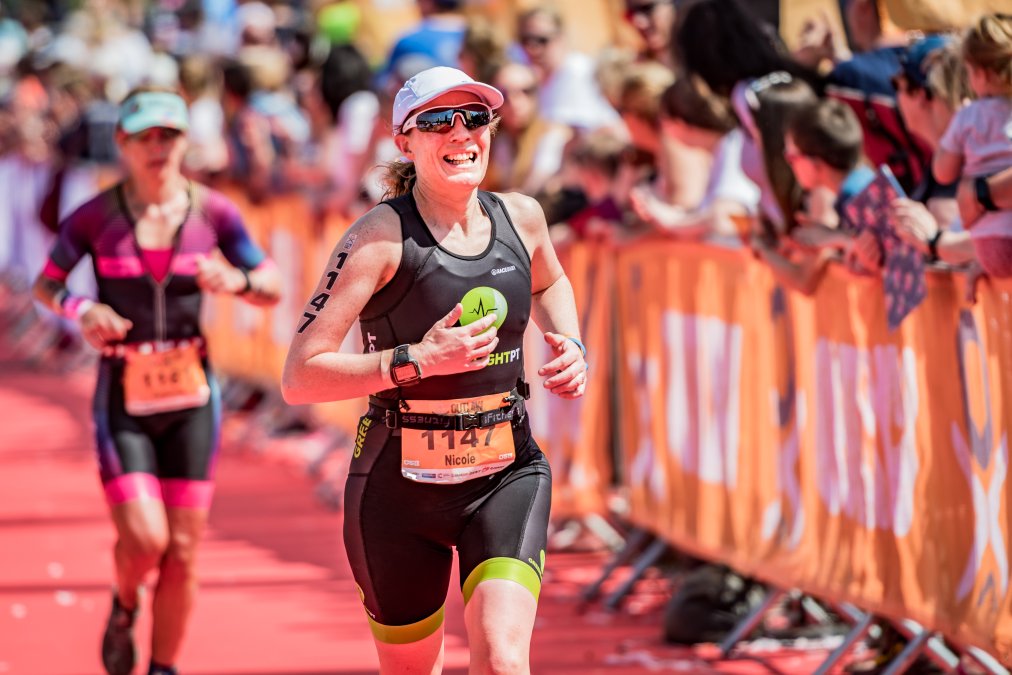
Athletes coming from cycling often assume they need padded shorts underneath. They do not. The suit has its own pad, and layering two pads creates pressure points and rubbing.
- Skip cotton underwear entirely
- Skip a sports bra with hard seams; choose a smooth, quick-drying option if you need support
- Skip separate cycling shorts under the suit
- Do apply anti-chafe balm at the neck, underarms and inner thighs
For open-water swims, the suit goes under the wetsuit. For pool-based training, many athletes train in the suit itself to confirm it does not rub before race day.
Matching Tri Apparel to Climate, Race Distance and Athlete Level
Climate changes what you need far more than most guides admit. A suit that works in a cool early-season race can be a liability in a hot, humid summer event. The same applies to athlete level and race distance: a sprint specialist and a long-course athlete have different priorities, and a beginner's needs differ from an elite's.
Hot, Humid Conditions
In heat, prioritise breathability, mesh panels and light colourways, dark fabrics absorb heat, light colours reflect it, and mesh side and back panels move heat away from the body. A full-length front zip lets you open the suit on the run for airflow. Avoid heavy compression panels in extreme heat, and prioritise hydration storage over aerodynamic optimisation when temperatures climb.
Cold, Wet Conditions
In cold or wet conditions, a suit that holds warmth and blocks wind matters more than maximum ventilation. Look for fabrics with a tighter weave that resist wind chill, and consider arm warmers and a gilet you can remove once you warm up. Quick drying still matters, wet fabric against skin chafes faster, so flatlock seams and a good anti-chafe routine are non-negotiable.
Variable and Unpredictable Conditions
Many races start cold and finish hot. Layering is the answer: a suit that works alone in mild conditions, plus removable arm warmers and a lightweight gilet that stashes in rear pockets. Choose a suit with enough pocket space to carry removed layers without them flapping.
Athlete Level: Beginner, Age-Group, Elite
Beginners benefit most from comfort and easy transitions. A forgiving fit that is easy to get on and off and comfortable in a more upright position serves better than a tight aerodynamic cut; prioritise a good pad and seam quality over weight savings.
Age-group athletes racing regularly need versatility. A suit that handles sprint through middle distance, with adequate storage and breathability, is often the best investment; for long course, prioritise a more supportive pad and a full-length zip for nature breaks.
Elite athletes chasing placings can accept a tighter, more aerodynamic cut where every gram and seam matters; a suit that feels restrictive in training may be perfect for a 90-minute race. Our Men's Aero Tri Suit is built for that group, while the Premium Tri Suit leans toward long-course comfort with a full-length zip and long-distance pad.
Race Distance: Sprint to Long Course
Sprint and Olympic suits can be lighter and thinner, while long-course suits need a more supportive pad, better storage and a full-length front zip for nature breaks.
Race Distance |
Priority Feature |
Why It Matters |
|---|---|---|
Sprint |
Lightweight one-piece |
Speed through short transitions |
Olympic |
Balanced pad and breathability |
Comfortable across all three legs |
Middle distance |
Rear pockets, mesh panels |
Nutrition storage and cooling |
Long course |
Full-length zip, long-distance pad |
Nature breaks and hours in the saddle |
A Practical Fit Checklist for Race Conditions
Before race day, test your suit in the conditions you expect: swim in it under a wetsuit if open water, ride in the race position for at least an hour, then run in it after a hard bike effort. Check for chafing at the neck, underarms and inner thighs, and adjust with anti-chafe balm or a different size if you find hot spots. A suit that works in training will not let you down.
Cost, Care and How Long Tri Apparel Lasts
A good tri suit should last several seasons with proper care. The two things that kill suits fastest are chlorine and heat.
Rinse the suit in cool fresh water immediately after every race and training session. Chlorine degrades elastane and breaks down hydrophobic coatings. Hot washes do the same.
- Rinse in cold water within an hour of finishing
- Use a gentle, non-biological detergent sparingly
- Avoid fabric softener entirely
- Air dry flat, away from radiators and direct sunlight
- Store folded, not stretched on a hanger
Cost versus value comes down to how often you race.
Our Men's Elite Tri Suit and Women's Elite Tri Suit use a Teflon coating to speed water shedding, which is the feature most worth paying for if you race open water regularly.
Conclusion: Choosing Tri Apparel That Earns Its Place
The hardest part of buying tri apparel is separating genuine benefits from marketing noise. Drag reduction is real but small; drying speed, comfort and transition efficiency are where the honest gains live.
At Raceskin, every suit is tested continuously in training and racing, and our dedicated designer builds custom club and team kit around the same feedback loop we use for our own range. If you want gear that covers all three disciplines without compromise, explore our tri suits and get race ready.
Frequently Asked Questions
Do you wear underwear under a tri suit?
No. Tri suits are designed to be worn directly against the skin, and the chamois padding is built into the suit itself. Wearing underwear underneath adds seams that can rub during the swim, bike and run legs, and cotton holds water long after you leave the water. A well-fitted tri suit with flatlock seams removes that friction risk entirely, which matters most on longer races where chafing builds over several hours.
Is a tri suit worth wearing for a first triathlon?
For most first-timers, yes. A single tri suit removes the need to change between disciplines, so you are not losing time in transition working out what to put on. It also means one garment has to be comfortable across swimming, cycling and running, which is exactly what tri apparel is engineered for. If you are unsure about committing, a two-piece suit gives you similar benefits with more flexibility on fit.
Can you wear a tri suit for training as well as racing?
You can, and many athletes do. Tri suits handle pool sessions, turbo trainer work and brick sessions without issue, though chlorine will shorten the life of any technical fabric over time, so rinse thoroughly after every swim. For everyday training, some athletes prefer separates for easier toilet breaks. Keeping one suit for racing and another for training is the simplest way to extend the race-day kit's lifespan.
What should you look for when choosing a tri suit?
Prioritise fit first, because a suit that bunches or rides up will cause chafing no matter how good the fabric is. Then check the chamois thickness against your race distance, since long-course suits use more padding than sprint suits. Look at seam construction, drying time and whether the suit has rear pockets for nutrition. A full-length front zip makes nature breaks significantly faster on long training sessions and races.