

Table of Contents
- Quick Comparison: Race Day Aero Kit at a Glance
- What Aerodynamic Cycling Gear Actually Saves You
- Aero Skinsuit Benefits for Time Trial and Triathlon
- How to Choose a Race Day Cycling Jersey
- Fabric Technology, Airflow and Aero Accessories
- Aero Kit for Different Body Types and Budgets
- Caring for Aero Fabrics and Race Day Checklists
- Frequently Asked Questions
Last Updated: September 24, 2026
Quick Comparison: Race Day Aero Kit at a Glance
Aerodynamic cycling gear for race day is apparel engineered to reduce drag, smooth airflow and help you hold speed for less effort. At Raceskin, we build and test kit in real training and racing conditions, so this guide covers what actually changes your finish time.
Item |
Price |
Primary Aero Job |
Best For |
|---|---|---|---|
£75.00 |
Trips air, smooths airflow, cuts drag |
Road races, time trials, club racing |
|
Women's Aero Jersey |
£70.00 |
Female-specific aero cut, trips air |
Road races, time trials |
Pro Fit Jersey |
£38.50 |
Race fit, moisture wicking, breathable |
Training and first race days |
Men's Aero Tri Suit |
£150.00 |
Second-skin fit, quick-drying |
Triathlon, duathlon |
Women's Tri Suit |
£99.00 |
Compression, fast-dry, flatlock seams |
Triathlon, long course |
Premium Tri Suit |
£175.00 |
Full-length zip, long-distance pad |
Ironman-distance racing |
What Aerodynamic Cycling Gear Actually Saves You
The honest answer is that aero kit saves seconds and watts, not minutes, and those seconds decide placings. Most of your drag comes from your body, so what you wear over it matters more than most riders assume.


Drag Reduction, Cda and Watt Savings Explained
Drag reduction is the process of lowering the force air exerts on you and your bike as you move forward. It is measured through CdA (coefficient of aerodynamic drag), which combines your drag coefficient with your frontal area. Lower CdA means less power needed to hold the same speed. Optimizing your equipment profile beyond the frame often involves integrating aerodynamic carbon wheelsets to further minimize turbulence and sustain higher velocities with less effort.
How Much Time Aero Kit Saves Over 40 km
Time savings scale with speed, and they add up fastest at 40 kph and above. A tighter, smoother front end reduces the pocket of turbulent air you push ahead of you, and that benefit compounds over a time trial or the bike leg of a triathlon.
Aero Skinsuit Benefits for Time Trial and Triathlon
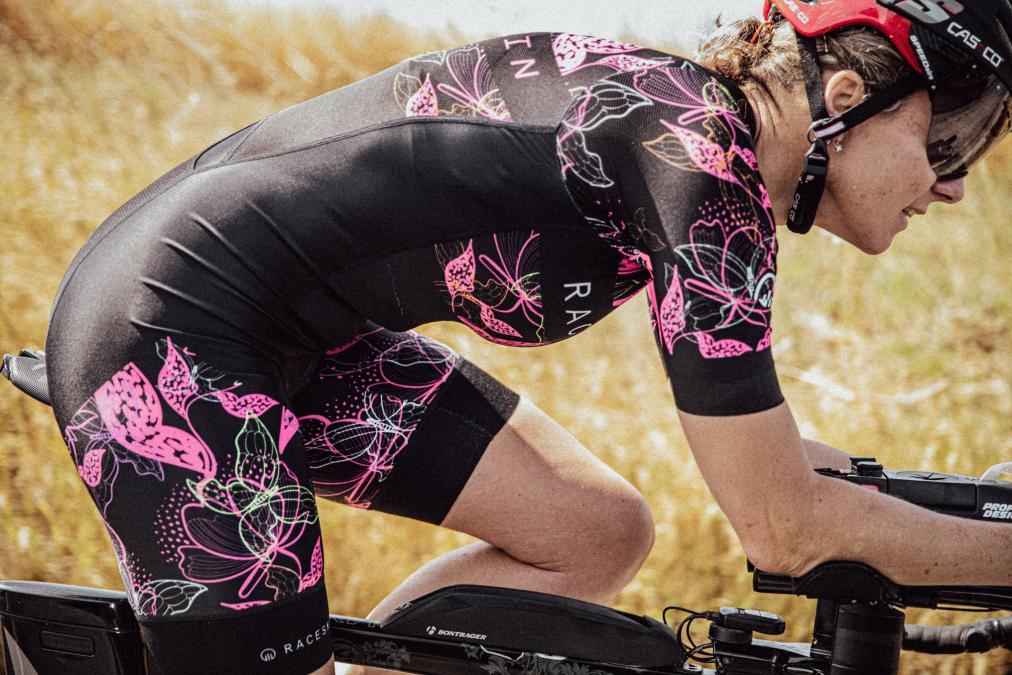
The aero skinsuit is the single biggest apparel upgrade for most riders because it removes the gaps, flapping and seams that a jersey and shorts create. A one-piece cut keeps fabric taut against the body from shoulder to thigh, and it lets designers place different fabrics on different zones without a waist seam interrupting the airflow.
Why a One-Piece Cut Is Faster Than Separates
A jersey and bib shorts overlap at the waist. That overlap creates a step in the surface, and a step creates a separation point where airflow detaches and turns turbulent. A skinsuit removes the step entirely, so air stays attached further down the torso and over the hips.
Skinsuits vs Traditional Jerseys and Bib Shorts
Traditional cycling apparel separates are comfortable and versatile, but they leave a seam line at the waist and a gap at the shoulders where air catches. A skinsuit or speedsuit removes both.
Fit Tolerance: Where Skinsuits Fail
Three fit failures cost most riders their gains:
- Shoulder bunching. If the torso is too long for your build, fabric gathers across the chest and creates a pocket that catches air.
- Leg gripper creep. If the leg hem rides up, the gripper band sits on the wrong part of the thigh and the fabric loses tension.
- Zip ripple. A full-length front zip that is not under tension will bow outward slightly, creating a vertical ridge down the centre of the chest.
A well-sized race fit jersey paired with bib shorts can outperform an ill-fitting skinsuit, because the separates at least sit flat. The lesson is that the one-piece advantage is conditional on fit, not automatic.

How to Choose a Race Day Cycling Jersey
Choosing a race day cycling jersey comes down to three things: fit, fabric and how long you will be in the saddle. Get the fit wrong and no amount of technical fabric will rescue your aerodynamics.
Race Fit vs Club Fit: Sizing and Compression
Race fit sits close to the body with no loose fabric, which is what you want on race day. Club fit leaves more room and suits training and social riding. Compression fit adds support to key muscle groups, which helps on longer efforts.
Fabric Technology, Airflow and Aero Accessories
Fabric technology decides how well air moves across your body, and the accessories you pair with it decide how much of that advantage you keep. The details are small, but they are cumulative, and they do not all contribute equally.
How the Accessories Rank by Impact
Most practitioners find the accessories stack roughly in this order, from largest to smallest contribution:
- Aero helmet. The head sits at the front of the airflow and is one of the last things to be shielded by the body. A shaped helmet with a short tail or a smooth, rounded profile manages airflow over the head and into the shoulders. This is usually the single biggest accessory gain.
- Overshoes. Shoes and exposed cleats and cables are bluff bodies, they create drag disproportionate to their size. A smooth overshoe covers that clutter and presents a cleaner surface to the air.
- Aero socks. Socks smooth the airflow around the lower leg, which is otherwise a moving cylinder. The gain is small but repeatable, and it stacks with the overshoe above it.
The Interaction Effect
Accessories do not add up in isolation. An aero helmet tested on a rider in a loose jersey will show a smaller gain than the same helmet on a rider in a tight skinsuit, because the airflow arriving at the helmet has already been disturbed by flapping fabric. This is why the order of priority matters: fix the body first, then the extremities.
Temperature Regulation vs Aero Efficiency
There is a real trade-off between cooling and drag. Fabrics that trip the air and hold a smooth surface tend to be denser and less breathable than open mesh. On a hot race day, a suit that traps heat will cost you more on the run than the aero gain saved on the bike, particularly in triathlon, where the bike leg is followed by a run in the same garment.
Aero Kit for Different Body Types and Budgets
Aero kit is not built for one body shape, and the biggest mistake riders make is buying the leanest cut available and hoping it fits. Fit beats fabric every time.
Budget-friendly aero hacks exist too:
- Prioritise the front of the body, since that is what meets the air first
- Tighten what you already own before buying new kit
- Choose one-piece over separates only when the fit is genuinely right
- Spend on the pieces you wear for the longest leg of your race
Budget Level |
Recommended Kit |
Approximate Outlay |
|---|---|---|
Entry |
Pro Fit Jersey |
£38.50 |
Mid |
Women's Tri Suit or Men's Aero Jersey |
£70.00-£99.00 |
Race |
Men's Aero Tri Suit |
£150.00 |
Long course |
Premium Tri Suit |
£175.00 |
Caring for Aero Fabrics and Race Day Checklists
Aero fabrics lose their advantage when they lose their shape, and most riders wash the performance out of their kit without realising it. Care is a performance issue, not a housekeeping one.
Race day checklist:
- Kit washed cool and air-dried, not tumble dried
- Fit checked in race position, not standing
- Seams and chamois inspected for wear
- Aero socks and overshoes packed
- Spare kit for warm-up
- Nothing new worn on race day
Frequently Asked Questions
How much time can aerodynamic cycling gear save in a race?
Most of the gain comes from body position, with clothing adding a smaller but real margin. A close-fitting jersey or tri suit, an aero helmet and shoe covers together can save roughly 30 to 60 seconds over a 40 km time trial at around 40 kph, depending on your position and how well the kit fits. Loose fabric, flapping pockets and an ill-fitting collar undo much of that, so fit matters as much as the garment itself.
What is the difference between a race-fit jersey and an aero skinsuit?
A race-fit jersey is cut close to the body with stretch fabrics and a gripper hem, and it is worn with bib shorts. A skinsuit or tri suit is a single garment covering the torso and legs, which removes the overlap between top and shorts and keeps the surface smooth from shoulder to knee. Skinsuits suit time trials and triathlon; a race-fit jersey is more practical for road racing and training.
Does fabric texture really improve aerodynamic performance?
Yes, at racing speeds. Textured panels on the shoulders and upper arms trip the boundary layer into turbulent flow earlier, which delays separation and lowers drag. Smooth fabric is not automatically faster; the placement of the texture matters more than the fabric itself. On a jersey or suit, look for panels positioned on the leading surfaces rather than all over the garment.
What should I look for in an aero skinsuit for long-distance events?
Prioritise comfort that survives five or more hours: flatlock seams to prevent chafing, a chamois thin enough to run in but padded enough for the bike, and a fabric that dries quickly out of the swim. A full-length opening zip helps on hot runs and makes nature breaks faster. Check the fit standing and in the riding position, because a suit that feels tight upright may pull across the shoulders when you are tucked low.
How does body position affect the efficiency of aerodynamic gear?
Body position accounts for the majority of your total drag, so kit can only improve on the position you hold. A low, narrow front end with a flat back reduces your frontal area, and clothing then smooths the airflow over that shape. If you sit up to relieve pressure, the aero benefit of the garment drops sharply, which is why a position you can hold for the full race matters more than any single item of kit.